 Brett Field
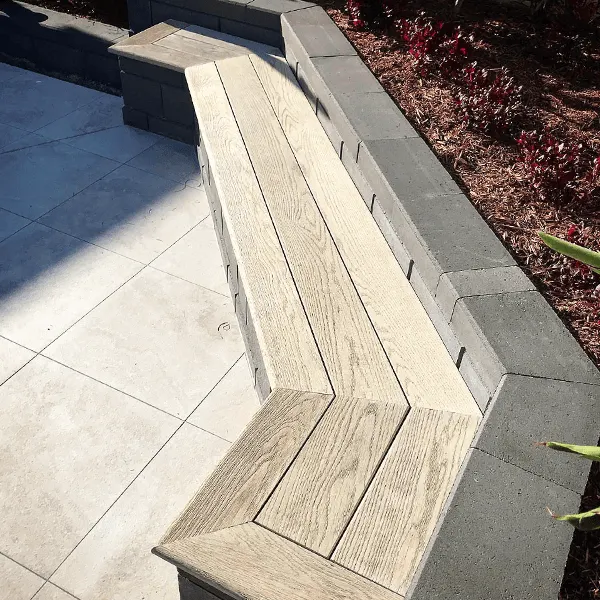
A standard bench seat is 460 mm to 510 mm high, measured from the floor to the top of the seat. Two furniture guides, Schots and Dimensions.com, both give 46 cm to 51 cm (18 to 20 inches).
Below are the heights, depths and lengths for two to four people, what changes for a built-in seat with a cushion, and where a built-in seat should go on a Queensland deck. The sizes come from furniture guides checked on 18 October 2026. We found no Australian Standard that sets a bench seat height for a home, so treat these as common sizes, not rules.
What is the standard bench seat height?
460 mm to 510 mm to the top of the seat. Both guides give exactly the same range, and Dimensions.com adds that the right height also depends on what the bench is used for.
| Measurement | Schots (February 2026) | Dimensions.com (June 2026) |
|---|---|---|
| Seat height | 460 mm to 510 mm | 460 mm to 510 mm |
| Seat depth | 460 mm to 510 mm for two people, up to 610 mm for bigger benches | 380 mm to 510 mm, about 440 mm for a dining bench |
| Length for two people | 1020 mm to 1270 mm | 1070 mm to 1270 mm |
Source: Schots, "4 common outdoor bench seat sizes", and Dimensions.com, "Benches", checked 18 October 2026. Both give centimetres and inches, and we have turned them into millimetres.
How deep should a built-in bench seat be?
About 460 mm to 510 mm, where the two guides overlap. Go shallower for a seat at a table, and deeper for a seat you lounge on.
- At a dining table or breakfast nook: Dimensions.com says a dining bench is around 440 mm deep. Schots says a shallower seat keeps you sitting upright.
- For reading or lounging: Schots says a deeper seat gives room to lounge. Its bigger benches go up to 610 mm deep.
- Not too deep: Dimensions.com says a seat deeper than 510 mm "will not be as comfortable" for most people. Schots adds that deep seats may not suit small children, who need back support.
If the seat sits against a wall with no backrest, people will lean on the wall. Keep that in mind before you go deep.
How long should a bench seat be?
Allow about 1020 mm to 1270 mm for two people, from Schots' sizes. Dimensions.com agrees: a bench of about 1070 mm to 1270 mm seats two.
| People | Bench length (Schots) |
|---|---|
| 2 | 1020 mm to 1270 mm |
| 3 | 1350 mm to 1780 mm |
| 4 | 1800 mm to 2290 mm |
| 5 or more | Over 2290 mm |
Source: Schots, checked 18 October 2026. Schots also says to leave room to get to the bench from behind or from the side, so it does not crowd the space.
Does a cushion change the height of a bench seat?
Yes. The heights above are to the top of the seat you actually sit on. On a built-in seat with a cushion, that is the top of the cushion.
- Choose the cushion first.
- Measure how thick it is when someone sits on it, not how thick it is in the shop.
- Build the base lower by that much, so the squashed cushion ends up in the 460 mm to 510 mm range.
The same goes for depth. A thick back cushion pushes you forward and makes the seat feel shallower.
What should you plan for a built-in bench seat?
Its height, depth and length, then what goes under it and where it goes. A built-in seat is joinery, so it is hard to change once it is in.
- Storage. Drawers are easy to reach. A lift-up lid is simpler, but you have to move the cushion to open it.
- Indoors or out. Outdoor seats need timber and fixings made for the weather, like a deck.
- Where it goes. By a back door for shoes and bags, in a dining nook, under a window, or on a deck. On a deck, the Queensland safety advice below matters.
Planning a seat by the back door for shoes and school bags? See our guide to what a mudroom is.
Where should a built-in bench seat go on a deck?
Against a wall, or well away from the balustrade, if the deck is more than one metre off the ground. The Queensland Government's deck, balcony and window safety guideline (March 2017) says there should be no climbable objects near the balustrade of a deck that high.
At 460 mm to 510 mm, a bench seat is an easy step up for a child. The guideline recommends keeping a non-climbable arc of 900 mm out from the top of the balustrade, "similar to the pool safety requirements". It says this is best practice, not a requirement of the National Construction Code. Because a built-in seat cannot be moved later, it is worth placing it right the first time.
Our guide to balustrade height in Queensland covers the balustrade rules themselves.
Can you put a bench seat near a pool fence?
Only outside the fence's clear zones. The QBCC lists outdoor furniture and deck ledges as climbable objects. They must be at least 900 mm from the outside of the pool fence and 300 mm from the inside.
That rule is about objects you can climb, and a built-in seat is one. Draw the seat on the deck plan with the fence on it, before anything is built. Our guide to timber pool decks covers the rest of the pool fence rules.
Do you need a licensed tradie to build a bench seat in Queensland?
Yes, if the job is worth more than $3,300. The QBCC says building work over that value needs a licensed contractor. A handyman can do work up to $3,300, as long as it is not electrical or plumbing work. If the seat needs power, such as lights or a power point, a licensed electrician does that part.
We build daybeds and bench seats across the Gold Coast, indoors and on decks, as part of our carpentry work. We set the height and depth around your cushions and how you will use the seat, and plan deck seats away from balustrades and pool fences. See our carpentry page for the other work we do.
Where do these figures come from?
Checked on 18 October 2026: Schots ("4 common outdoor bench seat sizes", updated 21 February 2026) and Dimensions.com ("Benches", updated 24 June 2026). Rules and safety advice from the Queensland Government (deck, balcony and window safety guideline, March 2017) and the QBCC (non-climbable zones, reviewed 15 May 2025; when you need a licence, reviewed 11 August 2021). We will check these figures again every three months.
See our carpentry work, or check what your job will cost.