 Brett Field
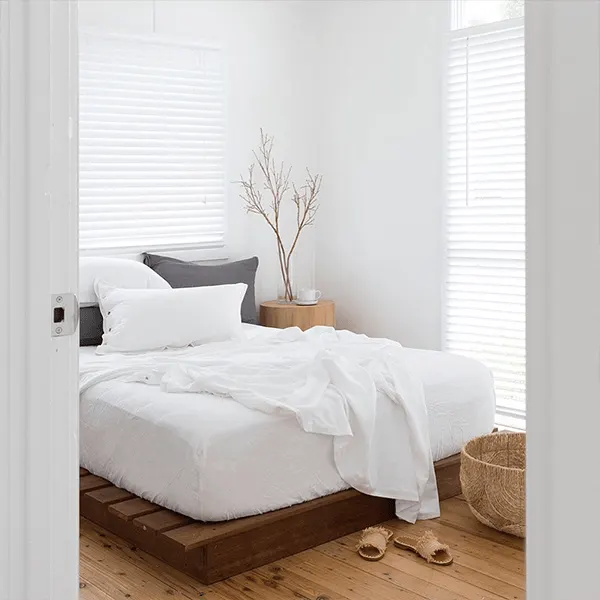
A window reveal is the lining that finishes the inside edge of a window opening, between the window frame and the wall. Its width has to match the thickness of your wall: window maker Wideline lists an 80 or 100 mm reveal for a timber or steel frame wall, and 117 or 138 mm for brick veneer.
Below are the types of reveal, a size chart for each kind of wall, timber versus square set reveals, what to do about a rotten one, and who does which part of the job in Queensland. These are published figures from window makers, checked on 10 November 2026. There are no prices here. For those, see our guide to window replacement cost.
What does a window reveal do?
It covers the gap between the window frame and the wall, so the opening looks finished from inside the room. A&L Windows describes the reveal as the frame or surround that finishes the internal edge of the opening.
It does more than look tidy. An aluminium window frame is narrow, much thinner than the wall it sits in. The reveal fills the rest of the wall's depth, from the window frame back to the plasterboard inside. A&L says the reveal is also how the window frame is attached to the stud wall frame in most homes. On a single skin brick wall, brick piers can do that job instead.
The reveal also gives the architraves something solid to nail to. The architrave is the moulding that covers the join between the reveal and the wall. Our guide to architraves covers those.
Window makers such as Stegbar and Wideline sell the reveal with the window, sized to your wall. So you choose it when you order the window, not after.
What types of window reveal are there?
There are three main types, set by which sides of the opening get a reveal and whether there is an architrave. A&L lists them like this, from most to least common:
| Type | Sides with a reveal | Architrave? | Where it is used |
|---|---|---|---|
| Boxed | All four | Yes, usually right around the window | Most windows. A&L calls it the most common type |
| No bottom reveal (NBR) | Top and both sides | Yes, on three sides | A window that sits on the floor, a bath edge or a benchtop |
| Plaster return (square set) | All four, lined in plaster | No | A clean, modern look with no trim |
A&L also lists a few less common set-ups, such as an offset reveal and full height sills that sit in line with, set into or offset from the wall. Your window maker can tell you which ones it makes.
Double brick walls are different again. Wideline uses storm moulds or brick lugs there instead of a standard reveal.
What size window reveal do you need?
You need a reveal as wide as your wall is thick, from the back of the window frame to the face of the plasterboard. Stegbar says to add up the timber stud, the internal lining and, for brick veneer, the cavity. If the outside is clad, add the thickness of the cladding too.
Here is Wideline's reveal size chart:
| Reveal width | Wall it suits | What makes up the wall |
|---|---|---|
| 80 mm | 70 mm timber or steel frame | 70 mm stud, plasterboard inside, weatherboards outside |
| 100 mm | 90 mm timber or steel frame | 90 mm stud, plasterboard inside, weatherboards outside |
| 117 mm | 230 mm brick veneer | 70 mm stud, 40 mm cavity, brick |
| 138 mm | 250 mm brick veneer | 90 mm stud, 40 mm cavity, brick |
| 165 mm | 270 mm double brick | Brick, 50 mm cavity, brick |
Stegbar's standard sizes are close to these. Stegbar's reveal size page lists 100, 116 and 138 mm reveals in Queensland, and gives a worked example: a 75 mm stud with a 10 mm lining needs a reveal of about 85 mm.
The reveal also makes the window bigger. Wideline's reveals are 19 mm thick on each side, and Stegbar allows 20 mm a side. So a 1200 x 1200 mm window needs an opening of about 1240 x 1240 mm in the frame. Measure the opening in a few places, because walls are rarely perfectly straight. Our guide to standard window sizes lists the common frame sizes.
Timber or square set reveals: which suits your home?
A timber reveal suits a home with architraves, and a square set reveal suits a plain, modern look with no trim. Neither one is better in every house. It comes down to the style of the room and how the rest of the windows are finished.
| Timber reveal | Square set (plaster return) | |
|---|---|---|
| Look | Painted or stained timber lining, framed by architraves | Plaster turns into the opening and meets the window frame |
| Architraves | Yes | No |
| Who finishes it | Supplied with the window, then trimmed by a carpenter | Finished by the plasterer as part of the wall lining |
| If it gets damaged | A section can be cut out and replaced by a carpenter | Patched and repainted like any plaster wall |
If you go with timber, the material matters in a humid place like the Gold Coast. For Queensland and northern New South Wales, A&L offers reveals in high moisture resistant MDF, finger-jointed pine or LOSP pine. LOSP stands for light organic solvent preservative, a treatment that helps the pine resist rot. Wideline makes its reveals in meranti or primed finger-jointed pine.
Matching the rest of the house is usually the deciding factor. One square set window in a room full of architraves tends to look like a mistake.
Can you fix a rotten reveal without replacing the window?
Often, yes. The reveal is a separate piece of timber around the window frame, so a rotten section can usually be cut out and replaced while the window stays in. A carpenter takes off the architrave, cuts out the soft timber, fits a new length of reveal, then refits and paints the trims.
The fix only lasts if you stop the water first. Rot needs moisture. Look for where it is getting in: a leak around the window frame, a failed seal, or water running off the glass and sitting on the bottom reveal. If the window frame itself leaks, that part goes back to the window maker or a glazier.
Check the damage is really rot before you fix it. Soft, crumbly timber can also be termites, and they need a pest inspection before any repair. Our guide to telling wood rot from termite damage shows the signs.
If the rot has reached the studs or the frame under the window, the job gets bigger. The wall frame is repaired first, then the reveal and trims go back on.
Who fits window reveals in Queensland?
The window and the glass are glazing work, and the reveal and timber trims around them are carpentry. The QBCC's glass, glazing and aluminium licence covers glazing and making and installing windows and doors. The QBCC carpentry licence covers installing windows and doors, fixing internal linings and mouldings, and restoring windows and frames.
In Queensland, any building work over $3,300 needs a contractor with a QBCC licence in the right class. So for a bigger job, ask each trade for their licence number and check it on the QBCC website.
We fit and repair reveals, architraves and sills across the Gold Coast, along with the framing and timber around windows and doors. The glass itself is glazing work, done by a licensed glazier. See our carpentry work for the window jobs we do.
Where do these figures come from?
Checked on 10 November 2026: A&L Windows, what is a window reveal (undated); Wideline, reveal sizes (undated, site dated 2021 to 2026); Stegbar, what reveal size do I need (undated); the QBCC's glass, glazing and aluminium licence page and carpentry licence page (both last reviewed August 2021, with fees updated 1 July 2026); and the QBCC's who must hold a licence page (April 2026). The opening size sum is from Stegbar's own example. We will check these figures again every three months.
See our carpentry work, or check what your job will cost.