 Brett Field
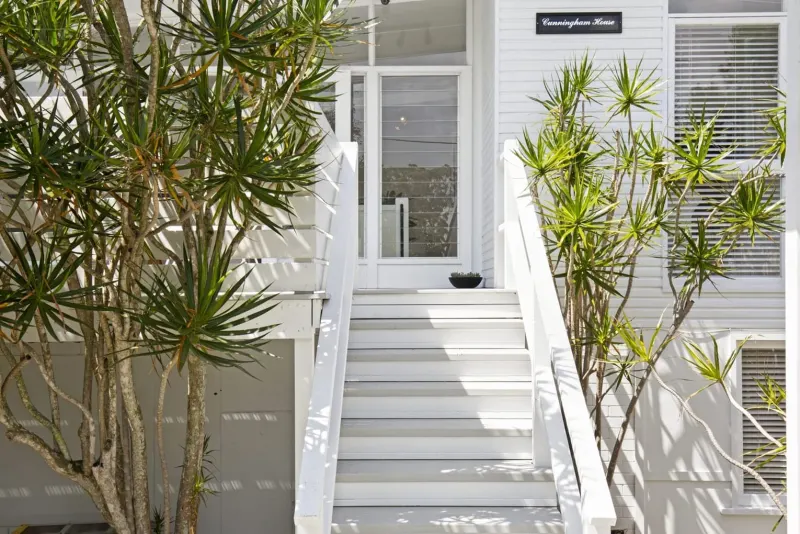
A door jamb is one of the upright pieces that line the sides of a door opening, and the hinges and latch are fixed to it. The door frame is the whole set around the door: the two side jambs, the head across the top, the stops the door closes against and, on an outside door, the sill.
In everyday talk the two words get mixed up, and many suppliers sell the whole frame as a "jamb set". Below are the parts of a jamb, the standard widths and heights in Australia, timber versus steel, and how to tell when one needs fixing. The sizes come from jamb makers and were checked on 10 November 2026. There are no prices here. For those, see our guide to door frame replacement cost.
What is the difference between a door jamb and a door frame?
The jamb is one part, and the frame is the whole thing. The frame is made of jambs, and the door hangs inside it.
| Word | What it means | How people use it |
|---|---|---|
| Door jamb | A side piece of the frame: the hinge side or the latch side | Often used for the whole frame, as in "jamb set" |
| Head (or header) | The top piece of the frame, across the opening | Sometimes called the head jamb |
| Door frame | The full set: both jambs, the head, the stops and, outside, the sill | Also used for the timber frame inside the door leaf itself |
| Pre-hung door | A door already hung in its frame, ready to fit | Saves fitting the hinges and latch on site |
Steel jamb maker Rondo, for example, sells a "door jamb pair" for the two sides and a separate "door header" for the top. Put together with the stops, that is the door frame.
The frame sits inside the rough opening in the wall framing. The gap between the frame and the wall is covered by architraves, the mouldings around the door. They are trim, not part of the frame.
What are the parts of a door jamb?
A door frame has a hinge side jamb, a latch side jamb, a head, a stop, a striker plate and, on outside doors, a sill. Each one does a different job.
- Hinge side jamb. The upright the door swings from. The hinges are screwed into a recess cut in its face.
- Latch side jamb. The upright the door closes against. Rondo calls it the striker side jamb.
- Striker plate. The metal plate on the latch side jamb that the latch clicks into.
- Head. The top piece, joining the two side jambs.
- Stop or rebate. The step the door closes against, so it does not swing straight through.
- Sill or threshold. The bottom piece on an outside door, which sheds water away from the house.
The stop comes in two forms. A rebated jamb has the step machined into the timber itself. A flat jamb has a separate strip of timber, the stop, nailed onto its face. Hume Doors & Timber sells single rebate jambs with 38, 43 or 44 mm rebates, a double rebate profile, and flat jambs with a loose stop.
A flat jamb with a loose stop is easier to adjust. The stop can be moved to suit a door that sits a little out of line. A rebated jamb is one solid piece, so the stop cannot work loose.
What size is a standard door jamb in Australia?
A standard door jamb is as wide as the wall is thick, and a jamb set for a standard door is 2040 mm high. For a home with 70 mm timber studs and 10 mm plasterboard on each side, the wall is 90 mm thick, so the jamb is about 90 mm wide.
Here are the wall widths and jamb set sizes from Rondo's Inspire door jamb guide (October 2025):
| Wall | Wall thickness | Rondo jamb set width |
|---|---|---|
| 70 mm timber studs, 10 mm plasterboard | 90 mm | 91 mm |
| 70 mm timber studs, 13 mm plasterboard | 96 mm | 97 mm |
| 90 mm timber studs, 10 mm plasterboard | 110 mm | 113 mm |
| 90 mm timber studs, 13 mm plasterboard | 116 mm | 119 mm |
Rondo makes its jambs 2040 or 2340 mm high, and its heads in 720, 820, 870 and 920 mm lengths, to suit the common door widths. Our guide to standard door sizes in Australia covers the doors themselves.
Timber jambs are usually bought in long lengths and cut to size on site. Intrim's single rebate jambs come in widths from 66 to 285 mm, 30 or 42 mm thick, in lengths of 5.2 to 5.4 m. A brick veneer wall or a thick outside wall needs one of the wider sizes.
Measure your own wall before you buy. Plasterboard thickness, stud size and old walls that are out of true all change the number. Steel jamb maker EzyJamb makes one profile that adjusts by up to 10 mm to cover that.
Timber or steel door jambs: which is better?
Neither is better for every job. Steel will not rot or feed termites, and timber is easier to cut, adjust and repair on site.
| Timber jamb | Steel jamb | |
|---|---|---|
| Rot and termites | Can rot if it stays wet, and termites eat it | EzyJamb says it will not rot, warp or twist, and termites leave it alone |
| Size | Cut to fit on site from long lengths | Made to a set wall thickness, so the wall must be measured first |
| Look | Usually finished with architraves | Wraps the plasterboard for a flush look, often with no architrave |
| Finish | Paint, stain or oil | Primed steel, ready to paint |
| Knocks and repairs | A damaged section can be cut out and spliced | EzyJamb says steel stands up to knocks better than timber |
Steel jambs are tough. EzyJamb says its frame passed a 10,000 door slam test, and Rondo's passed a British door slamming test at light and medium duty. Rondo's Inspire range is for internal, non-fire-rated doors.
Timber still makes sense in most renovations, where you are replacing one frame in a wall that is already lined. Hume says meranti is used for door jambs and entry frames that need a strong, good-looking finish. For an outside door on the Gold Coast, keep the bottom of a timber jamb painted and sealed, and keep garden beds and mulch away from it.
How do you know if a door jamb needs fixing or replacing?
A jamb needs fixing when the door sticks, will not latch or has a gap down one side, and it needs replacing when the timber is rotten, eaten by termites or split. Here is what each sign usually points to:
- The door rubs or will not latch. Often loose hinge screws or a jamb that has moved out of square. Repacking the jamb or the hinges usually fixes it.
- Soft or crumbly timber at the bottom. Usually rot from water on an outside door. A short rotten section can be cut out and a new piece spliced in.
- Hollow timber, mud tracks or thin paint that cracks when pressed. Possible termites. Get a pest inspection before any repair.
- A split jamb near the latch. Often from a forced entry. The latch side jamb, or the whole frame, gets replaced.
The QBCC says to have a licensed pest controller inspect your home every year, or more often in high risk areas. Ask them to check the timber near the ground, door jambs included. For the QBCC's advice, see its page on how to protect against termites.
If a glazed outside door is being replaced with its frame, the QBCC's fact sheet on windows and glazed external doors says the door must suit your site's wind rating and water resistance needs. Check the label on the new door before it goes in. Our guide to door installation cost covers fitting a new door.
We repair and replace door jambs and frames across the Gold Coast, rehang doors in sound frames and fit pre-hung sets. See our carpentry work for the door jobs we do.
Where do these figures come from?
Checked on 10 November 2026: Rondo's Inspire door jambs guide, version 1 (October 2025); Intrim's custom single rebate door jamb page (undated); Hume Doors & Timber's meranti mouldings page (undated, catalogue dated January 2026); EzyJamb, steel door frame versus timber (undated, late 2026); the QBCC's protect against termites page (March 2024); and the QBCC fact sheet on selection criteria for windows and glazed external doors (October 2022). The 90 mm wall sum is from Rondo's table. We will check these sizes again every three months.
See our carpentry work, or check what your job will cost.