 Brett Field
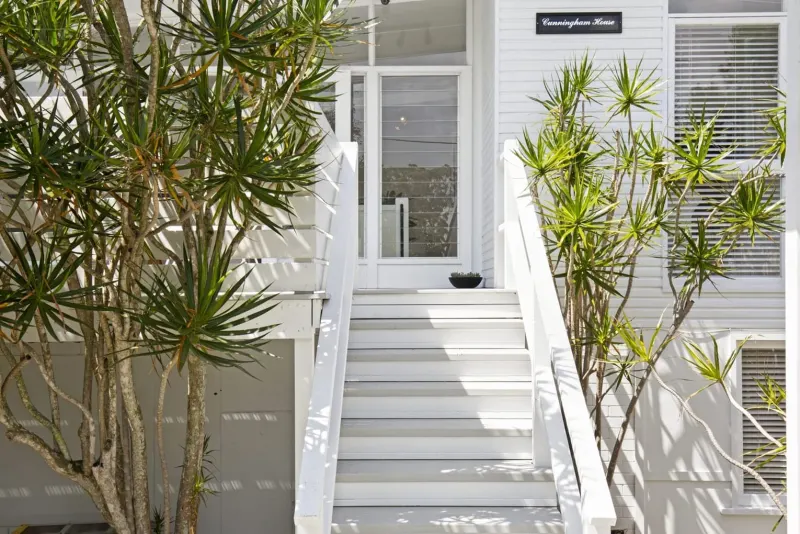
You renovate old stairs in one of two ways: refresh the surface you see (sand and recoat, paint, or cap the old treads with new timber), or replace the worn parts (treads, nosings, risers, the handrail or the balustrade). The Australian Building Codes Board (ABCB) says an existing home does not have to meet today's National Construction Code (NCC) until new building work is done, so the parts you rebuild are the ones held to today's rules.
Below are the options, the lead paint risk, the rules for new parts, when to replace instead, and costs. These are market prices from cost guides, checked on 25 November 2026. They are not a quote from us. This is not legal or engineering advice: a building certifier has the final word on your stairs.
What are the ways to renovate old stairs?
There are six main options, from a recoat to new parts. The more you replace, the more of today's code applies.
| Option | What it means | Code rules to check |
|---|---|---|
| Sand and recoat | Sand back the treads, risers and rail, then oil, stain or clear coat | Usually none (cosmetic work) |
| Paint | Paint the risers, stringers or the whole stair | Usually none, but test for lead first |
| Cap or clad | Fix new timber treads and risers over the old ones | Even step heights, grip |
| Carpet to timber | Lift the carpet, then sand, cap or replace what is under it | As for capping, if new timber goes on |
| New treads and nosings | Take out worn treads and fit new ones | Step sizes, even steps, grip |
| New balustrade or handrail | Replace the rail, balusters or infill | Height, 125 mm gaps, handrail |
Source: our summary. Code rules from NCC 2022 Housing Provisions Parts 11.2 and 11.3; the cosmetic work point from the ABCB.
One idea for an old stair: oil the treads and paint the risers and stringers. The parts you walk on show the timber, and the painted faces are easy to touch up.
Can you sand and recoat old timber stairs?
Yes, if the treads are solid timber with enough wood left to sand. WoodSolutions, the timber industry's technical site, says clear polishes are often chosen on stairs to show off the timber, and that nails should be punched at least 3 mm below the surface before finishing.
Think about two things first. Hardness: WoodSolutions says soft species used for treads "can be expected to indent", so a soft pine tread will dent sooner than a hard one. Grip: the NCC's target for a tread is a slip rating of P3 or R10 dry and P4 or R11 wet (Table 11.2.4). Ask for a coating with a slip rating, or fit anti-slip nosing strips.
Is it safe to sand old painted stairs?
Not until you know whether the paint has lead in it. The Australian Government's Lead Alert guide to painting your home says homes built before 1970 are most at risk, but newer homes may also have lead paint. Paint with more than 1 per cent lead was still used until the late 1960s.
The guide names stair treads and balustrades among the surfaces that get knocked and rubbed, and suggests taking lead paint off them even if you cover the rest. It says dry sanding, dry scraping, burning and power tools create the most serious dangers, because the dust is fine enough to breathe in. Safer methods it lists include wet sanding by hand, with a respirator. It warns that colour-change test kits can give false results, and lists lab testing. A contractor can also remove the paint for you.
Can you put new timber over old stair treads?
Yes. This is called capping or cladding. New timber treads and risers are fixed over the old ones, which stay as the frame. US stair maker Viewrail sells a tread for this job and says it "sits over what is already there". It suits a stair that is solid but looks tired.
Watch the step heights. Capping lifts every tread by the same amount, so the middle steps stay the same, but the bottom step gets taller and the top step shorter. Say each cap adds 20 mm on a stair with 180 mm risers. The bottom riser becomes 200 mm and the top riser 160 mm (our sums). That breaks three NCC rules: risers can be no more than 190 mm, two risers side by side can differ by no more than 5 mm, and the biggest and smallest in a flight by no more than 10 mm.
Ways around it: lift the floor at the top and bottom by the same 20 mm, for example with new flooring, or take the old treads out and fit new ones at the same thickness. Our free stair calculator checks a set of steps against the code.
How do you change carpeted stairs to timber?
Look under the carpet first. Pull back a corner at the back of a tread, where it will not show, and check the tread and its front edge (the nosing). Then pick a path:
- Sand it if it is solid timber in good shape. Fill the staple holes first.
- Cap it if it is firm but rough, or a sheet product. Watch the step heights.
- Replace it if the treads are split, loose or worn through.
Bare treads need grip too, so plan the finish or nosing strips at the same time.
Which stair renovations have to meet today's building code?
Mostly the parts you replace. The ABCB's page on how the NCC applies to your home says existing homes "do not need to meet current NCC standards unless new building work is done". Treat a new tread, balustrade or closed-in riser as new work, and build it to the NCC 2022 numbers:
- Steps: risers 115 to 190 mm, goings 240 to 355 mm, and even (within 5 mm of the next step, 10 mm across the flight).
- Open risers: no gap a 125 mm sphere can pass through.
- Grip: P3 or R10 dry, P4 or R11 wet.
- Balustrade: wherever you could fall 1 m or more, at least 865 mm above the nosings on the stair and 1 m on a landing, with no opening a 125 mm sphere can pass.
- Handrail: on a stair rising 1 m or more, along at least one side, at least 865 mm above the nosings.
Our guides to stair dimensions in Australia and balustrade height in Queensland explain each rule. The ABCB page does not say how much of the old stair must be updated when you replace one part, so ask a certifier first.
Can you close in open risers or replace an old balustrade?
Yes. Say a stair has 180 mm risers and 35 mm treads. The open gap is about 145 mm, so it fails the 125 mm rule (our sum). A riser board fills the gap, or a rail fixed across the back of each step can bring it under 125 mm.
A new balustrade must meet the heights and gaps above. Our free balustrade calculator works out how many balusters you need. Stainless wire is allowed when it is built to the wire tables in NCC 11.3.6. To test an old balustrade, the Queensland Government's Deck, balcony and window safety guideline says that if a firm hit with a heavy rubber mallet knocks a handrail or balustrade loose, the fixing is not good enough.
When do old stairs need replacing instead of renovating?
When the structure under the finish has failed: rotten stringers, decayed or split treads, rusted fixings, or a stair that has moved. The same Queensland guideline (March 2017) lists signs of decay: fungus, timber that is spongy and fibrous or has sunk, blistered paint, termite mud nests or fine "sawdust", and rusted or bent fixings. It says poking suspect timber with a screwdriver helps find decay, and to get expert advice on what it means for the structure.
The Queensland Government says to inspect your deck at least once a year, so check outdoor stairs then too. If they are past saving, our guide on how to build deck stairs covers new ones.
Do you need a licence or approval to renovate stairs in QLD?
You need a QBCC licensed contractor once the job is valued over $3,300, the QBCC's line for building work.
Approval is a separate question. Business Queensland says a building approval is needed before work starts on "most types of domestic building work". The City of Gold Coast's page on whether your building works need approval says minor repairs that do not affect a building's structural or fire safety may not need one. For a rebuilt stair or new stringers, ask a certifier first.
We build and renovate timber stairs and railings, inside and out, across the Gold Coast. Brett has more than 25 years on the tools and holds QBCC licence 15316127. He books in any other trades a job needs, and you get a timeline with the proposal. See our timber stairs page.
What does a stair renovation cost?
It depends on the job. These are the published figures that fit stair work.
| Job | Typical cost | Source |
|---|---|---|
| Minor stair repairs (squeaky or loose treads, one tread or baluster) | $295 to $1,175 per job, typically $590 | What's The Damage, Gold Coast page (November 2026) |
| Carpenter, by the hour | $54 to $125, typically $83 | What's The Damage, Gold Coast page (November 2026) |
| New treads and risers on a staircase | $1,800 to $2,500 | Airtasker staircase cost guide (January 2023) |
| Balustrade (posts, rails and infill) | $145 to $440 per metre, typically $275 | What's The Damage, Gold Coast deck steps and balustrade page (November 2026) |
| Handrails and balustrades, national average | $287 per metre | ServiceSeeking (August 2026) |
The Airtasker figure is from 2023, older than the rest. We found no cost guide that prices sanding, painting or capping a stair per step. Our guide to timber stairs costs on the Gold Coast covers new staircases.
Where do these figures come from?
Checked on 25 November 2026: NCC 2022 Housing Provisions Parts 11.2 and 11.3 (no page date); the ABCB homeowner page (no date shown); WoodSolutions, Stairs, Interior (no date shown); Viewrail's stair treads page (no date shown); the Australian Government's Lead Alert guide (5th edition, 2016); the Queensland Government's deck safety guideline (March 2017) and deck inspection page (10 July 2026); the City of Gold Coast approval page (no date shown); Business Queensland's approvals page (July 2022); the QBCC licence page (August 2021); What's The Damage, Gold Coast pages (November 2026); ServiceSeeking (18 August 2026); and Airtasker, where Oneflare's old staircase page now goes (17 January 2023). The capping and gap examples are our sums. We will check these figures again every three months.
See our carpentry work, or check what your job will cost.