 Brett Field
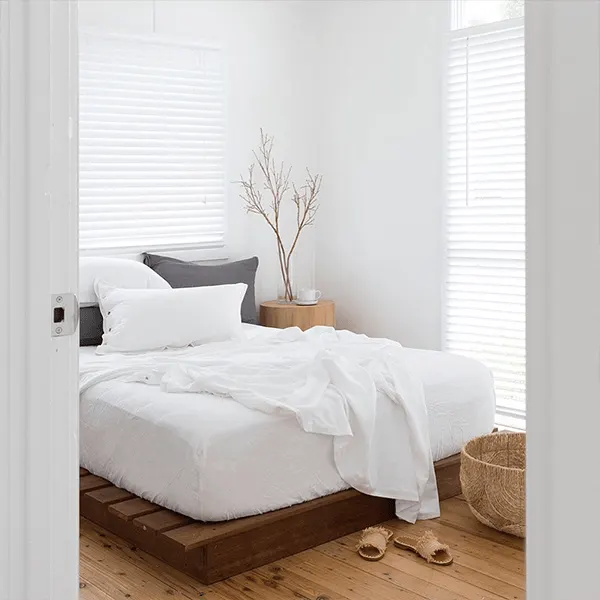
The common skirting board profiles in Australia are square, bullnose, pencil round, splayed (bevelled), colonial and lambs tongue, going by the ranges sold by Corinthian and the timber supplier Bowens. Shadowline is the seventh choice, and it has no board at all. Pick the shape that suits the age and style of your house, then match it to your architraves.
Below are the profiles, common heights, materials, Gold Coast issues, how skirting is fitted and what it costs. These are market prices from cost guides, checked on 4 November 2026. They are not a quote from us.
What is a skirting board and what does it do?
A skirting board is the strip of trim along the bottom of a wall, where the wall meets the floor. The Quote Yard's Queensland guide says it covers the expansion gap that has to be left between the floor and the wall, and protects the base of the wall from scuffs and moisture.
The floor needs room to move, so it stops a little short of the wall and the skirting hides the edge. Skirting normally goes on after the flooring, says What's The Damage. A scotia (a thin quarter-round strip) can cover a gap under old skirting, but in its words scotia "hides a gap; it does not fix a board".
What types of skirting boards are there?
There are six common shapes, plus shadowline, which has no board.
| Profile | What it looks like | Suits |
|---|---|---|
| Square | A flat board with square edges | The plainest, cleanest look |
| Bullnose | A flat board with a broad rounded top | A plain look with a softer edge than square |
| Pencil round | A flat board with a small rounded top edge | Contemporary homes, rentals and busy areas, as it is easy to clean and paint |
| Splayed (bevelled) | The top edge is cut at an angle | Contemporary and minimalist homes |
| Colonial | Layered, stepped detail on the face | Queenslanders, heritage homes and Hamptons-style builds |
| Lambs tongue | A flat board with a gentle curve at the top | Homes that mix traditional touches with a modern layout |
| Shadowline | No board. A recessed gap about 10 to 15 mm deep at the base of the wall | Contemporary, minimal interiors |
Sources: Bowens (April 2025), The Quote Yard (July 2026) and Corinthian's Queensland mouldings range (2025), checked 4 November 2026.
Colonial comes in more than one version. Corinthian's Queensland range has a Colonial, an Australian Colonial and a Queensland Colonial, and they are not the same shape. Matching boards in an older home? Take a short offcut to the supplier. Bigger profiles also cost more to fit: What's The Damage says a 185 mm bullnose or a moulded colonial is heavier, dearer per metre and slower to cut and fix.
What size skirting boards are common?
Most new skirting is between 90 mm and 185 mm high and about 18 mm thick. The Quote Yard says 90 mm boards were once the standard, but 115 mm and 138 mm are now the baseline, with 138 mm the most popular height for new work and 185 mm common in higher-end homes.
The makers go further. Moulding maker Intrim listed its popular skirting profiles from 66 mm up to 285 mm high, mostly 18 mm thick and some 25 mm (2022). Corinthian's 2025 Queensland range has shaped mouldings up to 140 x 19 mm and plain dressed boards up to 163 x 19 mm, in 5.4 m lengths. Corinthian says its sizes are nominal, so measure the real board before you join new to old.
Ceiling height is the usual guide. The Quote Yard suggests 90 mm to 115 mm skirting for standard 2.4 m ceilings, and says Queenslanders with ceilings of 3 m or more can carry 150 mm to 185 mm. Intrim agrees that tall ceilings can look better with taller skirting.
Is MDF, pine or hardwood skirting better?
Primed MDF is the cheapest and fine in dry rooms. Pine costs a bit more, and hardwood costs the most but can be stained or oiled. Here is how they compare.
| Material | Good for | Watch out for | Supply and install per metre |
|---|---|---|---|
| Primed MDF | Low cost, smooth, ready to paint, easy to cut and fix | Swells for good if it gets wet. Standard MDF is not for wet areas | $12-$20 |
| Moisture-resistant (MR) MDF | The same as MDF, but made for damp rooms | Ask for MR grade by name when you order | - |
| Finger-jointed pine | Solid timber at a middle price, made for painting | Corinthian recommends an oil-based undercoat on pine to cut the risk of swelling | $14-$22 |
| Hardwood (spotted gum, blackbutt, Tasmanian oak, brushbox) | A clear, stained or oiled finish, and high-traffic rooms | Costs more and is harder to handle without damage | $18-$35 |
Sources: prices from The Quote Yard (Queensland, July 2026); notes from Bowens, What's The Damage, The Quote Yard and Corinthian.
What's The Damage calls primed MDF "the default" for skirting, but warns that it "swells irreversibly if it gets wet". A leak or a flooded floor means new boards, not a repair.
Which skirting should I use in a bathroom or laundry?
Use moisture-resistant MDF or solid hardwood. The Quote Yard says one of these should be specified for bathrooms, laundries and rooms next to wet areas. On a ground-floor slab with a risk of damp or flooding, it suggests hardwood with the back of the board sealed.
The skirting is not the waterproofing. The join between the wall and the floor is sealed first, under the tiles or floor finish. Queensland uses the National Construction Code 2022, and its Part 10.2 sets these rules for that join:
- in a bathroom, outside the shower, the wall and floor join must be waterproof
- in a laundry or a separate toilet, the join must be water resistant
- where a perimeter flashing is used, it must rise at least 25 mm above the finished floor
The waterproofing trade does this before the skirting goes on. A certifier has the final word on your wet area.
What should Gold Coast homes watch for with skirting?
Humidity and termites. The Quote Yard says Queensland's humidity swings from about 40% in dry winter weeks to 90% in summer storms, so timber moves more than it does down south. Its advice: let the boards settle in the house for several days, scribe the inside corners, and use a flexible sealant along the top edge.
Termites are the bigger worry. The QBCC says the Building Code of Australia requires termite protection for a few key parts of a home, and it lists architraves and skirting alongside framing, door jambs and window frames. It says termites are a problem right across Queensland.
The QBCC's advice on its termite page is to have a licensed pest controller inspect your home every year, or more often in high-risk areas. If you find damaged skirting, get the inspection done before anyone replaces it. Our guide to termite damage repair cost covers the order the work should happen in.
How is skirting board installed?
Each board is cut to length, fixed to the wall and joined at the corners. The Quote Yard describes the usual method:
- Fixing. Boards are nailed into the studs behind the plasterboard with a brad nailer. Some carpenters add construction adhesive. Brick or block walls need masonry nails or concrete screws.
- Inside corners. These are mitred or scribed. The Quote Yard says scribing gives a tighter joint, which is why experienced finish carpenters prefer it.
- Outside corners. These are mitred, glued with PVA and pinned.
Scribing means shaping the end or bottom of a board so it follows what it sits against, such as an uneven floor. What's The Damage says "most of the skill" is in scribing to the floor and the wall. It also warns that pulling off old skirting can take plaster with it, and that new skirting arrives primed, not painted. Gap filling, caulking and two top coats are a separate trade and a separate cost.
How much does skirting board installation cost?
About $20 to $54 a metre supplied and fitted, with $29 typical, on What's The Damage's Gold Coast page (November 2026). The Quote Yard's Queensland figures run a bit lower for plain MDF.
| Item | Price | Source |
|---|---|---|
| Skirting supplied and fitted, per metre | $20-$54 (typical $29) | What's The Damage, Gold Coast page (Nov 2026) |
| MDF skirting, supply and install, per metre | $12-$20 | The Quote Yard, Queensland (Jul 2026) |
| Shadowline or square set, per metre | $15-$30 | The Quote Yard (Jul 2026) |
| Heritage profile matching, per metre | $25-$50 | The Quote Yard (Jul 2026) |
| Remove and replace, one room | $400-$900 | The Quote Yard (Jul 2026) |
| Whole house, 3 bedrooms | $2,500-$5,000 | The Quote Yard (Jul 2026) |
| Carpenter, per hour | $54-$125 (typical $83) | What's The Damage, Gold Coast page (Nov 2026) |
The Quote Yard's worked example puts 80 to 100 metres of MDF skirting at $2,500 to $4,000. Painting is extra. Small jobs are often charged by the hour instead: see our guide to carpenter cost per hour.
What pushes the price up: a tall or moulded profile, pulling out old boards, walls that need patching, and rooms with lots of corners. What's The Damage says per-metre rates "almost always improve with volume". On shadowline, The Quote Yard says the cost is often about the same as boards or slightly higher, because the plasterboard has to be done to a higher standard and the walls must be very flat.
How do I choose the right skirting for my house?
Go by four things. Style: stepped colonial shapes for older homes, flat or lightly shaped boards for modern ones. Height: about 90 to 115 mm for 2.4 m ceilings, taller for high ones. Material: MDF in dry rooms, MR MDF or hardwood near water. And the match: The Quote Yard says most skirting ranges have a matching architrave, and mixing ranges is a common renovation mistake.
We fit and replace skirting boards across the Gold Coast, in renovations, new rooms and repairs after termite or water damage. See our carpentry work for the trim, doors and other jobs we do.
Where do these prices come from?
Checked on 4 November 2026: What's The Damage (carpenter cost, Gold Coast page, updated November 2026, and its skirting and architrave guide, Adelaide page, November 2026), The Quote Yard (skirting board installation and replacement in Queensland, 25 July 2026), Corinthian's Queensland mouldings range (2025), Bowens (architrave and skirting designs, 30 April 2025) and Intrim's popular skirting profiles as published by The Interiors Addict (4 February 2022). Rules from the Australian Building Codes Board (NCC 2022 Part 10.2) and the QBCC (termite protection page, March 2024). We will check the prices again every three months.
See our carpentry work, or check what your job will cost.