 Brett Field
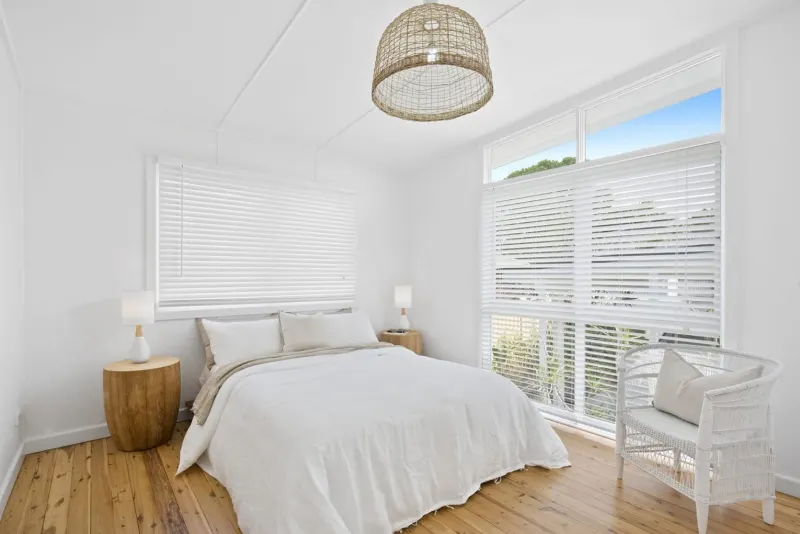
A dado rail is a timber or MDF moulding fixed along the wall at about chair-back height. Moulding maker Intrim puts it at around 900 to 1,000 mm from the floor in a room with a standard 2.4 m ceiling, and higher under taller ceilings.
Below is what a dado rail is for, how high it should go, how it differs from a chair rail and a picture rail, the profiles you can buy, how it is fitted and whether it suits your home. Heights are design rules of thumb from moulding makers, checked on 10 November 2026. No building rule sets the height of a dado rail.
What is a dado rail for?
Today it is mostly decoration. It breaks up a tall, plain wall and gives the room a line to work to. Intrim says rails were traditionally fixed at chair-back height, which is where the other name, chair rail, comes from.
A dado rail can do three jobs:
- On its own. Intrim says a rail works fine without any panelling below it, as a simple line around the room.
- As the top of wall panelling. Where the lower part of the wall is panelled (often called wainscoting), the rail marks the top edge of the panelled zone.
- As part of the paint scheme. Intrim suggests painting the wall and rail the same light colour, and, for a tone-on-tone look, picking a profile with clear shadow lines so the rail still shows.
How high should a dado rail be?
For a standard 2.4 m ceiling, about 900 to 1,000 mm from the floor. Intrim's dado rail height guide gives a simple sum: wall height divided by 5, times 2. That is two fifths of the wall, or 960 mm on a 2.4 m wall.
The older rule of thumb is about a third of the wall, which puts the rail lower. Intrim's chair rail page uses the one third rule but still lands on about 960 mm for a 2.4 m ceiling. Here is how the rules compare:
| Ceiling height | One third of the wall | Two fifths of the wall | Intrim's suggested height |
|---|---|---|---|
| 2.4 m | 800 mm | 960 mm | 900 to 1,000 mm |
| 2.7 m | 900 mm | 1,080 mm | 1,000 to 1,100 mm |
| 3.0 m or more | 1,000 mm | 1,200 mm | 1,100 to 1,200 mm |
| Heritage rooms, period look | - | - | 850 to 950 mm |
The one third and two fifths columns are our sums. Intrim's height guide also suggests:
- Hallways: up to 1,200 mm, depending on the ceiling height.
- Bathrooms: around 900 mm or lower, depending on where the bath and basin sit.
- Bedrooms: a lower rail that works with the bedhead.
- Stairs: the same height above each tread as the rail in the hall, lined up with the handrail.
Intrim warns that a rail set too high can make a room look squat, and suggests keeping furniture below the rail. Before you fix anything, tape a line at two or three heights and look at it with the furniture in place.
Dado rail, chair rail or picture rail: what is the difference?
A dado rail and a chair rail are the same thing: Intrim sells them as one range, "chair/dado rails". A picture rail is a different moulding that sits near the ceiling.
| Rail | Where it goes | What it is for |
|---|---|---|
| Dado rail (chair rail) | About 900 to 1,000 mm up a 2.4 m wall | A decorative line, or the top edge of wall panelling |
| Picture rail | About 300 mm below the ceiling, or in line with the top of the door architrave | Hanging pictures from hooks, so you do not put holes in the wall |
Intrim says a picture rail should hold a picture hook as long as the rail itself is fixed well, and that its exact height is a design choice. Lining the rail up with the top of the door trim keeps the lines in the room tidy. Our guide to what an architrave is covers the door trim side of that.
What profiles do dado rails come in?
Many. Intrim alone lists 11 chair rail profiles, and matches each one to house styles.
| House style | Intrim profiles it suggests |
|---|---|
| Classic Hamptons | CR62, CR46, CR09, CR22 |
| Modern Hamptons | CR84, CR23B, CR99, CR22, CR05B, CR62 |
| Modern Coastal and Coastal Scandi | CR09, CR190, CR23B |
| Country or Modern Farmhouse | CR99, CR30, CR22, CR09, CR23B |
| Victorian and Georgian | CR280, CR46, CR09, CR62, CR30, CR05B |
| French Provincial and French Parisian | CR84, CR280, CR46, CR62, CR99, CR22, CR05B |
| Art Deco and Modern Contemporary | CR190 |
Intrim makes its range in finger-jointed (FJ) pine, MDF and American oak, and can supply treated pine for wet areas such as bathrooms and laundries. Business Queensland lists hoop pine for mouldings and joinery: it machines to a smooth surface and takes paint and stain well, but it is not termite resistant.
Pick a rail that matches your skirting and architraves. Our guide to skirting board profiles shows the common shapes and how they pair up.
How is a dado rail fitted?
It is marked out at one height around the room, then glued and nailed to the studs. Intrim's wall panelling installation guide sets out these steps:
- Prepare the wall. Intrim says the wall should be prepared and primed before the rail goes on.
- Set the height and mark it on the wall. Intrim uses a height stick to carry the line for the underside of the rail around the room.
- Find the studs at rail height with a stud finder and mark them. Our guide to stud spacing in Australia explains how far apart they usually are.
- Glue and nail. Intrim lists its own adhesive and short nails, nailed at the stud marks.
- Meet the architraves neatly. Where the rail is thicker than the door trim, Intrim bevels the end at 45 degrees. Its example is a 3 mm bevel where a 21 mm rail meets an 18 mm architrave.
- Paint. Intrim's guide ends with the rail ready for painting.
Check the wall before anyone drills or nails into it. Asbestos Queensland says if your house was built before 1990, there is a good chance it contains asbestos, including wall sheeting in dry rooms such as bedrooms and lounge rooms. Its advice for home renovators is to assume a material contains asbestos until a NATA accredited lab has tested a sample.
Does a dado rail suit a modern home or a Queenslander?
It can suit both. Intrim matches its rails to modern styles such as Modern Coastal and Modern Contemporary, as well as to period styles.
- A modern home. A simple profile painted the same colour as the wall reads as a shadow line, not a feature. Intrim suggests CR190 for Modern Contemporary rooms.
- A Queenslander or an older home. If the ceilings are tall, Intrim's guide puts the rail at 1,100 to 1,200 mm for ceilings of 3 m or more. For a period look in a heritage room, it suggests 850 to 950 mm. Its profile picks for Victorian and Georgian homes are in the table above.
Whatever the house, keep the rail at one level around the room, so the line reads cleanly.
In Queensland, the QBCC carpentry licence covers fixing internal linings, panelling and mouldings, and work valued over $3,300 needs a licensed contractor. We fit and replace trim across the Gold Coast, including skirting boards and architraves, in renovations, new rooms and repairs. For what a carpenter charges, see our guide to carpenter cost per hour. Brett holds QBCC licence 15316127. See our carpentry page for the finishing work we do.
Where do these figures come from?
Checked on 10 November 2026: Intrim Mouldings, How high from the floor should the dado rail be? (8 May 2021), its chair rails page and its picture rails page (both undated, 2026 site) and its wainscoting and wall panelling installation guide (undated); Asbestos Queensland, Homeowners: look, check and prepare (undated); Business Queensland, Hoop pine (updated 12 December 2018); and the QBCC pages on the carpentry licence class (30 August 2021) and who must hold a licence (16 April 2026). Heights are design guidance, not building rules. We will check these sources again every three months.
See our carpentry work, or check what your job will cost.